2026-10-24 ·
How to Spot Creosote Buildup Before It Becomes a Problem
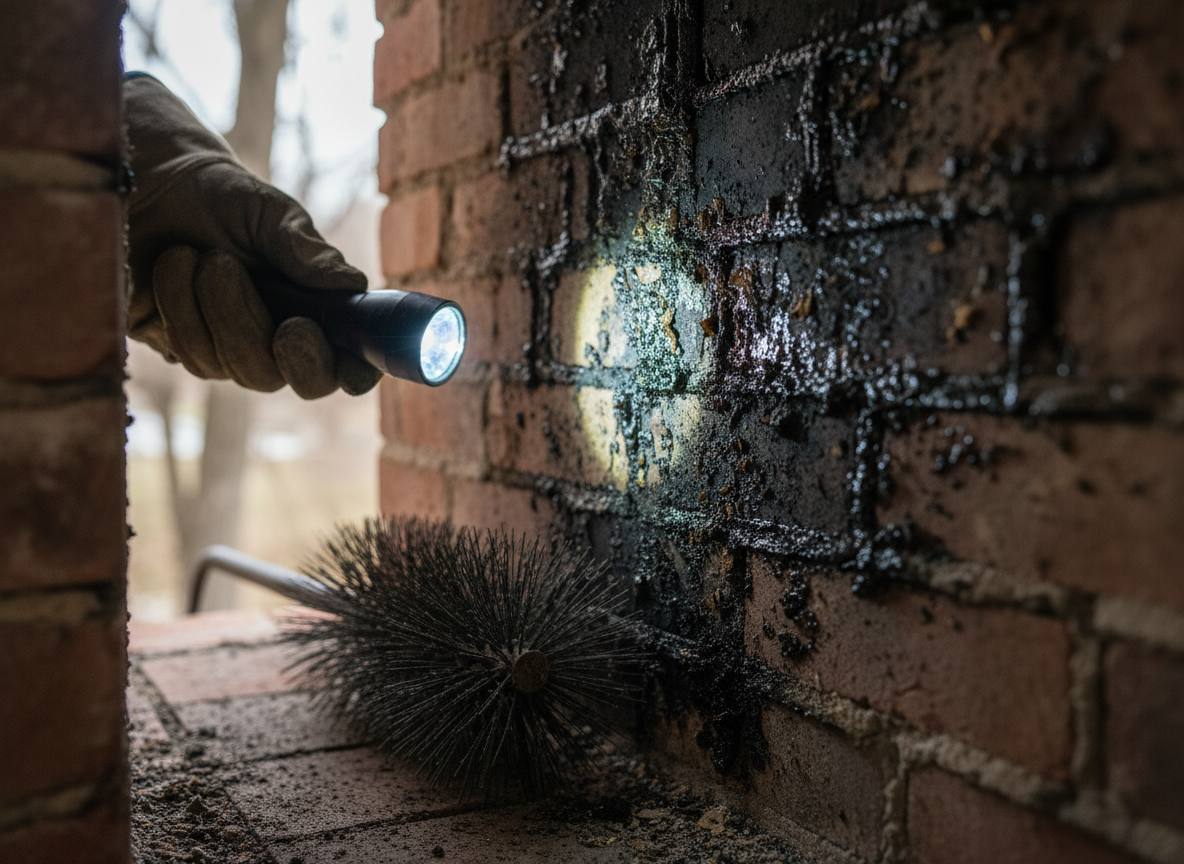
Creosote buildup becomes visible after 4–8 weeks of consistent wood burning in Benbrook homes once overnight lows drop below 45°F. Check the flue interior for shiny black or brown flakes that flake off easily, and note any sharp tar smell when the damper opens. These early markers appear faster in older brick chimneys common across Westpark Estates and Brookside Estates because cooler nights and occasional humidity slow draft and let vapors condense higher in the stack.
Early Visual Markers Inside the Flue
Homeowners in Benbrook can spot creosote without special tools by shining a bright flashlight up the flue from the firebox on a clear day. Look for a sticky, varnish-like coating on the flue tiles that starts thin and glossy then thickens into 1/8-inch or thicker crusts near the smoke shelf. In metal chimneys found in some Ridglea Hills homes the deposit often shows as dark streaks running down the liner seams. If you see these signs after burning seasoned oak or mesquite for two weekends, schedule a professional look before the next cold front moves through Tarrant County.
Smell and Draft Changes That Signal Trouble
A sharp, acrid odor rising from the fireplace when the house is closed often means creosote has begun to restrict airflow in Benbrook chimneys. Residents notice the damper feels harder to open or smoke spills into the room during the first fire of the evening. These draft shifts happen sooner in homes near Benbrook Lake where prevailing winds can push cooler air down the flue and increase condensation. Track how many logs it now takes to maintain a steady flame; an increase of two or three logs per evening points to narrowing passages that need attention before they force an emergency chimney repair.
Seasonal Timing for Benbrook Homes
Creosote risk peaks from late October through early March when Benbrook residents fire up fireplaces on 30–40 nights. After the first hard freeze, plan an inspection if you have burned wood more than three times a week. Neighborhoods such as Timber Creek and Hidden Valley sit in slightly lower terrain that holds evening moisture longer, so creosote layers form faster on north-facing flues. A quick check after Thanksgiving and again after New Year’s keeps the flue clear through the rest of winter without waiting for visible smoke backdraft.
When to Call for Chimney Inspection Service
If the coating inside the flue reaches 1/4 inch or you smell creosote even when the fireplace is cold, book a chimney inspection service rather than attempting to scrape it yourself. Technicians can measure exact thickness and determine whether the deposit is Stage 1, 2, or 3 before it ignites. Many older brick chimneys in Mont Del and Country Glen already carry hairline cracks that let creosote seep into masonry joints, turning a cleaning job into chimney masonry repair if left unchecked.
Preventing Further Buildup After Discovery
Once creosote is confirmed, switch to drier, smaller splits and burn hotter fires for shorter periods to reduce condensation in the upper flue. Pair this habit with annual chimney cleaning service visits before the first freeze. Homeowners who also read Draft Issues Common in Brick Chimneys Around Benbrook learn how cracked crowns and missing caps let extra moisture in, speeding the cycle. Keeping the 24/7 line at 7901 Camp Bowie W Blvd ready means same-day response if a sudden cold snap reveals heavy buildup that blocks the damper.
Why Local Conditions Accelerate the Problem
Tarrant County’s mix of mild days and sharp night drops creates repeated heating and cooling cycles inside the chimney that pull creosote deeper into mortar joints. Soil movement around Lake Benbrook Estates can tilt older foundations slightly, altering flue alignment and slowing draft even more. These factors combine so that what starts as a thin film after Thanksgiving can reach ignition thickness by Valentine’s Day if the fireplace sees regular use. Spotting the change early keeps repair costs in the normal range instead of escalating to full chimney restoration.