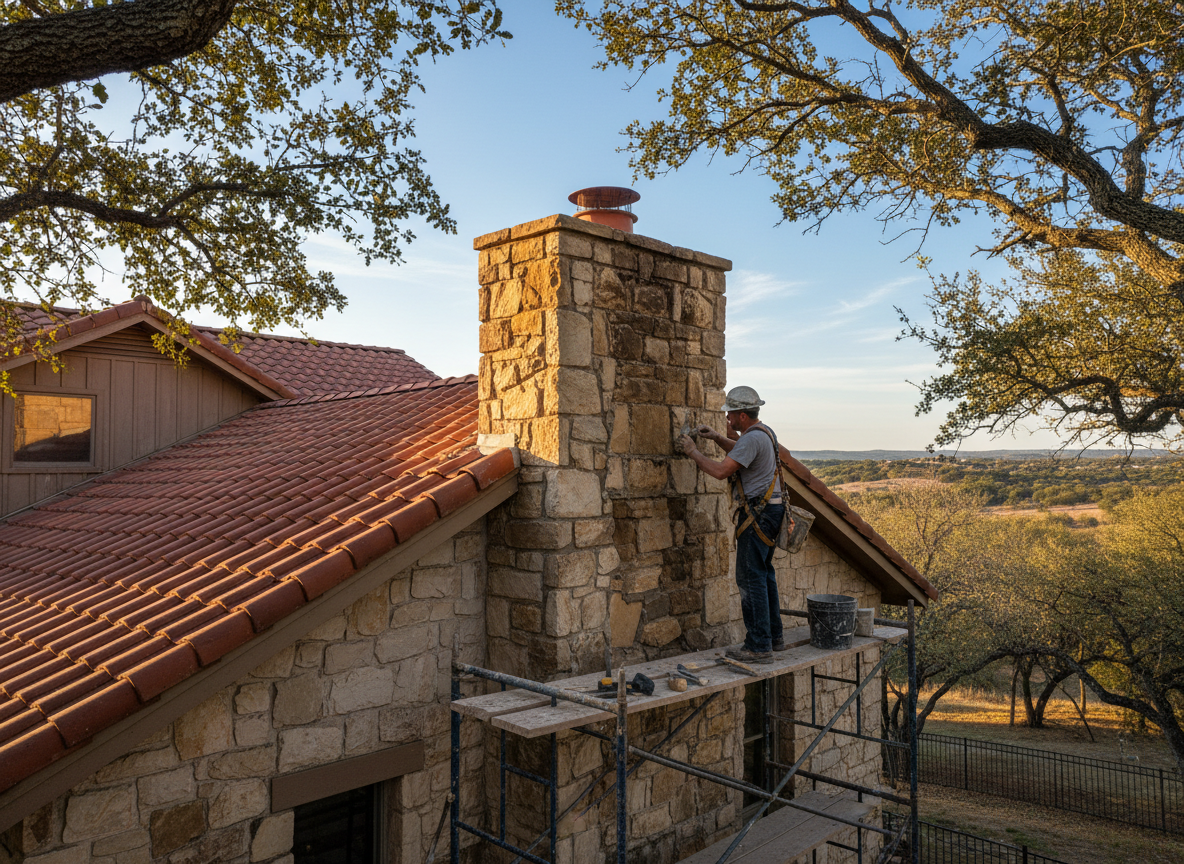
Benbrook homes built from the 1950s through the 1970s often feature brick chimneys set on slab foundations with minimal flashing. Summer heat expands the brick while winter freezes contract the mortar, opening hairline cracks that let water reach the flue liner. Once moisture reaches the clay-heavy soil near the Clear Fork of the Trinity, small shifts at the base turn minor leaks into full chimney separation from the roofline.
Repair starts with removing loose mortar and damaged brick rather than simply pointing over existing cracks. We match the original brick color and use type-N mortar formulated for the region’s temperature swings, then install new step flashing where the chimney meets the roof deck. Homeowners frequently overlook the crown; a deteriorated concrete crown allows water to pool and freeze, so we recast it with a slope that sheds rain before it reaches the flue.
Access on single-story ranch homes common along Winscott Road is straightforward, but two-story homes near Benbrook Lake require scaffolding that adds time. We never use caulk as a permanent fix because Texas UV breaks it down within two seasons, leaving the same water path open again.
Technician insight
In Benbrook, the thing that catches most people out with chimney masonry repair is how the clay soil along the Clear Fork shifts after heavy spring rains and pushes the chimney base out of plumb. Homeowners see a crack at the roofline and think it is just pointing, but the real movement is happening two feet below grade where the footing sits on expansive soil.
Separated Chimney on a 1962 Ranch
A homeowner near Winscott Road noticed daylight between the chimney and roof after a wet spring. We found the base had moved with the soil and the crown was holding water. We rebuilt the lower six courses of brick, recast the crown with a steeper pitch, and tied new flashing into the existing shingles. The chimney now sits plumb and has stayed dry through the following summer storms.
How it works
- 1
Site Inspection
We examine the crown, mortar joints, brick faces, and flashing from the roof to the cleanout door while documenting any separation from the structure.
- 2
Damage Assessment
We identify whether cracks are cosmetic or structural, check for water staining inside the flue, and note any foundation movement tied to local soil conditions.
- 3
Masonry Repair
Damaged brick and mortar are removed, new material is installed to match existing work, and the crown is recast or sealed with proper slope.
- 4
Final Weatherproofing
New step flashing is integrated with existing roofing and the chimney is tested for water intrusion before cleanup.
Pricing
Cost depends on chimney height, extent of brick replacement, and scaffolding needs. Upfront quotes are provided after inspection.