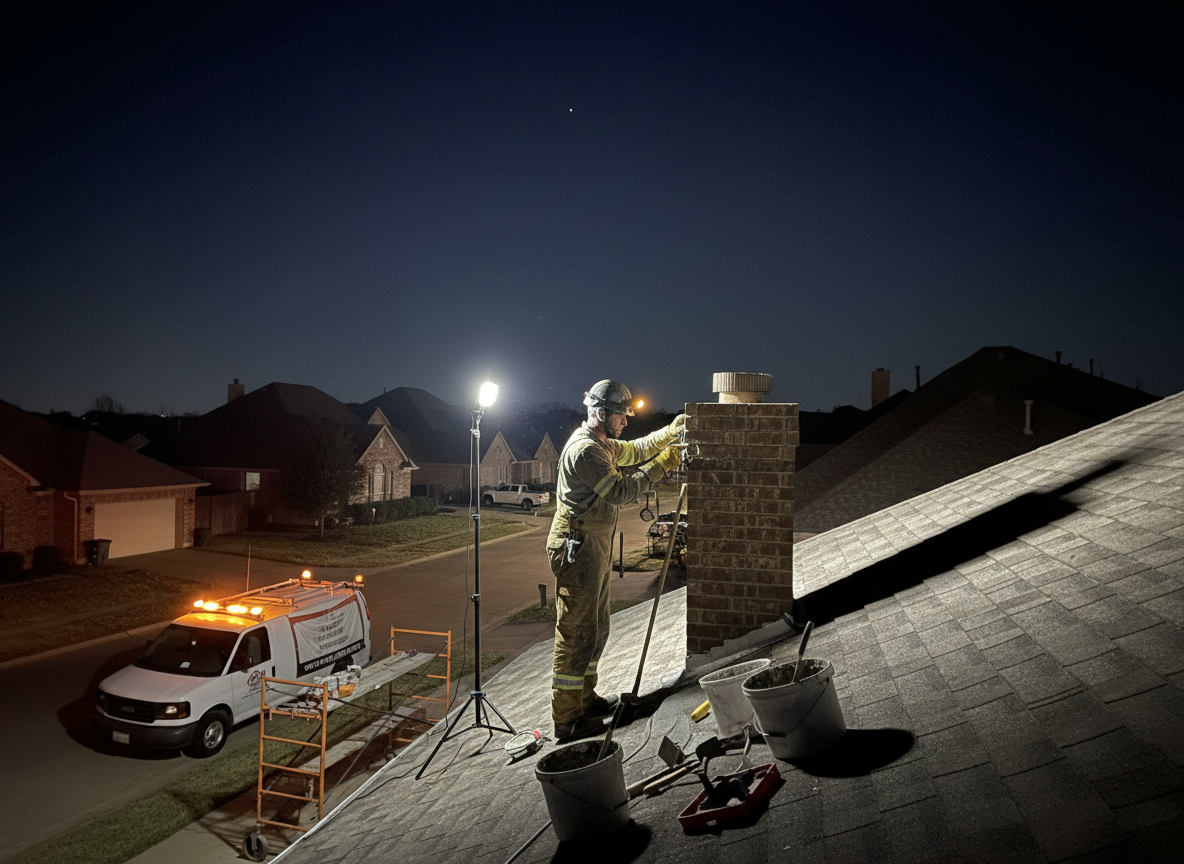
Benbrook sits in Tarrant County where spring thunderstorms and occasional winter cold fronts hit hard. These events loosen mortar joints and crack flue tiles in chimneys on homes built from the 1950s through the 1970s near Benbrook Lake and along Highway 377. Water gets behind the crown or flashing, runs down the flue, and saturates the masonry. A 24/7 call often means arriving after dark with lights and tarps to stop active leaks before they reach the living space or ignite creosote.
Older brick chimneys in the area rest on shallow footings set in the clay soils common west of Fort Worth. When heavy rain saturates the ground, minor settlement shifts the stack and opens new gaps at the roof line. Technicians carry spare flue liners and stainless caps sized for the common 8-by-8 and 8-by-12 sizes found in these houses. Working at night requires checking draft with a smoke test after temporary sealing because wind off the lake can reverse flow and push smoke back inside.
Code in Benbrook follows the International Residential Code with local amendments on spark arrestors and clearance to combustibles. A repair that bypasses a damaged flue liner can fail inspection later and leave the homeowner exposed to carbon monoxide. The 24/7 team documents every joint and liner section with photos before closing the job so the owner has a record for insurance or future sale.
Technician insight
In Benbrook, the thing that catches most people out with 24/7 chimney repair is how clay soil along the Trinity River basin swells and shifts after heavy spring rains, pulling older chimneys on homes near Benbrook Lake out of plumb and opening new leaks at the roof line overnight.
Wind-Damaged Chimney After Storm
A spring thunderstorm knocked several bricks loose on a chimney in a 1960s ranch west of Benbrook. Water had already entered the flue and reached the attic. We arrived after midnight, tarped the stack, and returned at first light to rebuild the top four courses and install a new stainless cap.
How it works
- 1
Emergency Assessment
Arrive on site, secure the area, and inspect the chimney from roof to firebox using lights and mirrors to locate active leaks or loose masonry.
- 2
Temporary Containment
Install tarps, seal open joints, and block the flue if needed to stop water or smoke from entering the home during the overnight hours.
- 3
Permanent Repair
Rebuild damaged sections, replace flue tiles or liners, repoint mortar, and reinstall proper flashing and crown materials matched to the existing roof.
- 4
Final Testing
Perform a smoke test and visual inspection to confirm draft and water-tightness before leaving the property.
Pricing
Upfront quotes given after inspection; cost depends on height, damage extent, and whether a liner replacement is required.