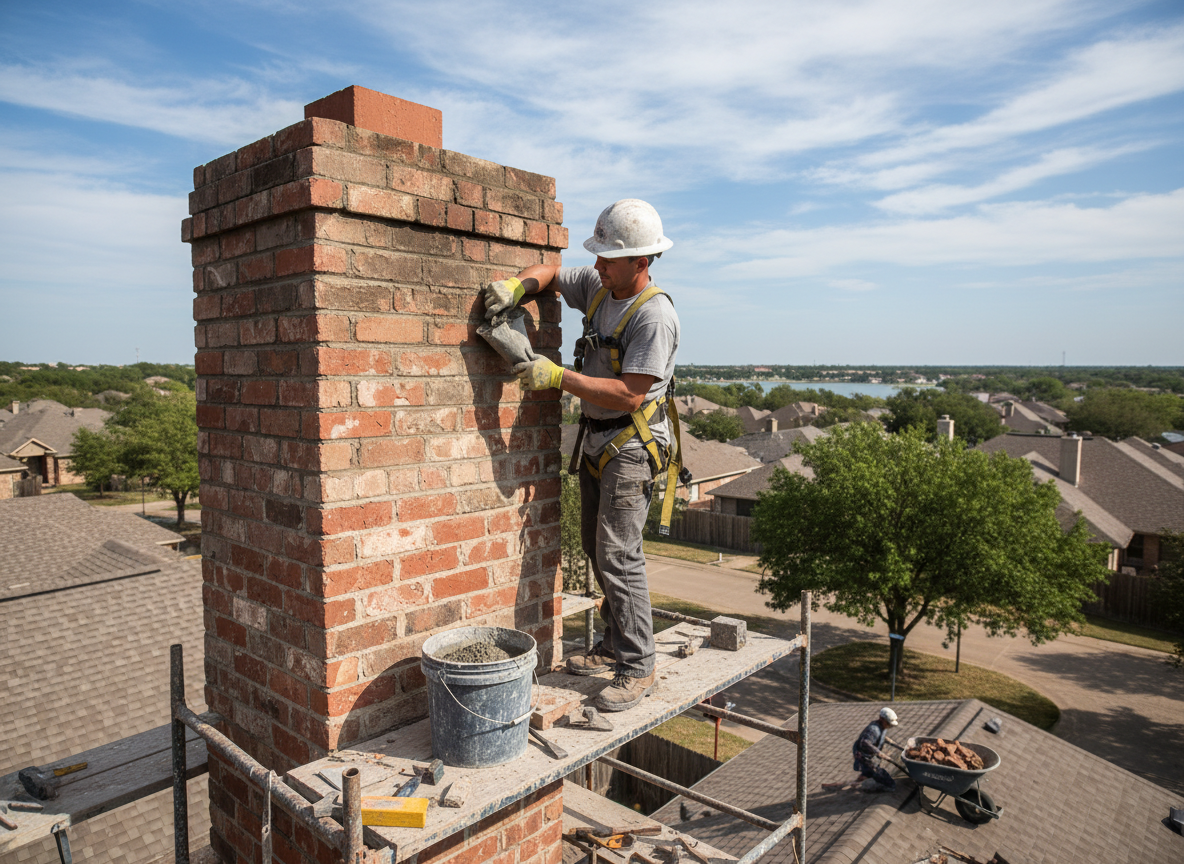
Benbrook homes built from the 1950s through the 1970s often feature brick chimneys set on clay-heavy soil that shifts with seasonal moisture changes. Freeze-thaw cycles common in Tarrant County winters open mortar joints and allow water to reach flue liners. Brick repair work here starts with checking both the exterior stack and the crown for hairline cracks that widen during summer heat expansion. Matching original brick color and texture prevents visible patches that stand out on these mid-century houses near Benbrook Lake.
Repointing requires removing failed mortar to a consistent depth without damaging surrounding brick faces. New mortar must match the original mix strength so it does not pull away when the next cold front moves through. Flashing at the roofline frequently needs resetting because wind-driven rain funnels water behind the bricks on homes with shallow roof pitches common in the area. Technicians also inspect for spalled bricks caused by trapped moisture that expands when temperatures drop below freezing.
Access on many Benbrook lots is limited by mature trees and narrow side yards, so scaffolding placement and debris containment become part of every job. Chimneys serving wood-burning fireplaces require extra care around creosote-stained bricks that can hide deeper cracks. Work stops if rain is forecast because fresh mortar needs dry conditions for proper curing in the local humidity.
Technician insight
In Benbrook, the thing that catches most people out with brick chimney repair is clay soil movement around older homes near the lake that tilts the stack just enough to open new cracks every winter after a hard freeze.
Loose Bricks After Winter Freeze
Problem: Homeowner in a 1960s Benbrook neighborhood noticed bricks shifting after a January freeze. What we found: Mortar joints had eroded from repeated freeze-thaw cycles and the crown had hairline cracks allowing water entry. What we did: Removed failed mortar, replaced several spalled bricks, and rebuilt the crown with proper slope. Outcome: Chimney stabilized and water shedding restored without further interior leaks.
How it works
- 1
Site Inspection
Examine the full chimney stack, crown, flashing, and interior flue for cracks, loose bricks, and water intrusion points.
- 2
Mortar and Brick Assessment
Identify failed joints and damaged bricks while noting soil movement or prior repairs that affect the current condition.
- 3
Repair Execution
Remove deteriorated mortar, replace damaged bricks, reset flashing, and apply new mortar matched to the original composition.
- 4
Final Check and Cleanup
Verify structural stability, confirm water shedding at the crown, and remove all debris from the roof and yard.
Pricing
Upfront quotes provided after on-site inspection; cost depends on chimney height, number of damaged bricks, and access constraints.