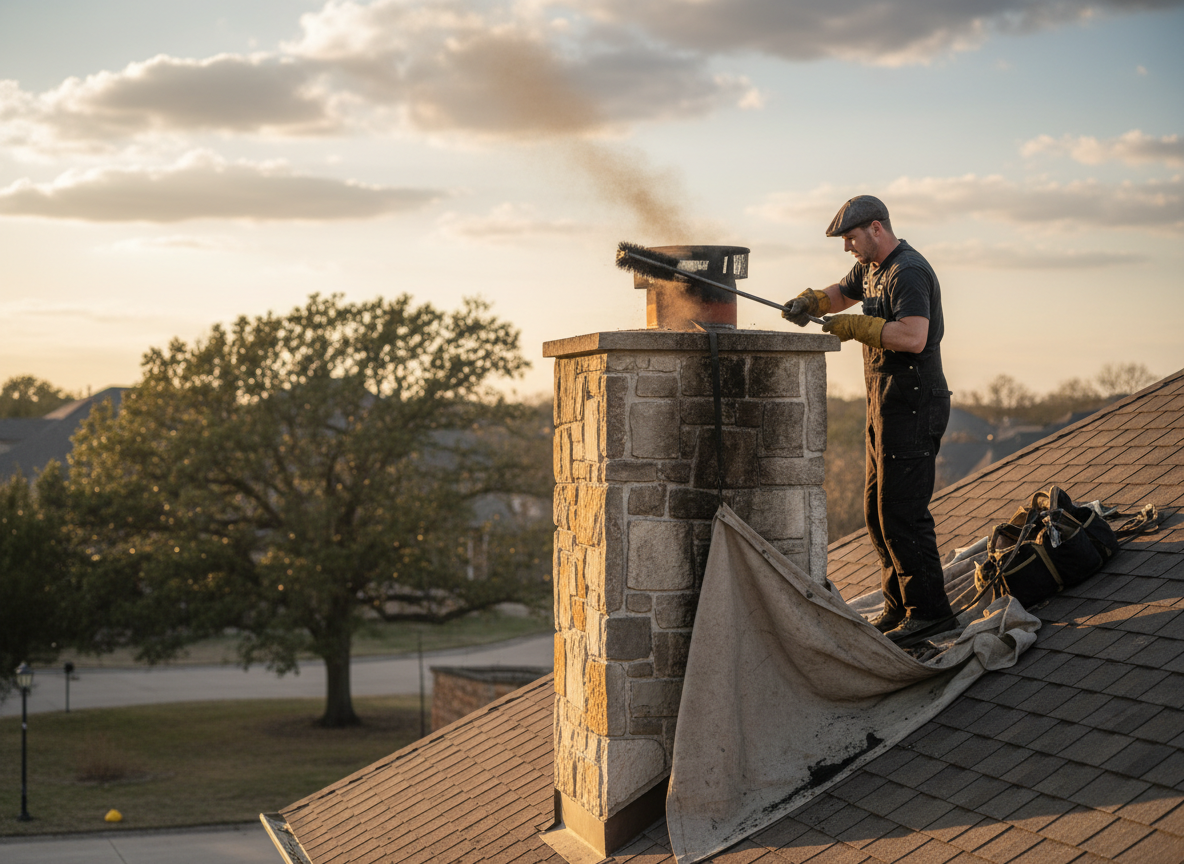
Benbrook homes built from the 1950s through the 1980s often feature masonry chimneys tied into brick or stone fireplaces. These flues collect creosote from burning seasoned oak and cedar during the brief winter heating season when temperatures drop below freezing. A full sweep reaches the smoke chamber and flue tile joints where soot bridges form most often, preventing draft restrictions that force smoke back into living spaces.
Tarrant County soil movement and occasional heavy rains can shift chimney crowns and flashing on older roofs along streets like Winscott Road and Dutch Branch. During a sweep we inspect for cracked flue tiles and missing mortar that allow water intrusion, which then mixes with creosote to create acidic runoff that damages the firebox floor. Homeowners notice white efflorescence on exterior brick after storms when these joints fail.
We start at the 7901 Camp Bowie W Blvd shop and arrive with rods sized for both 8-inch and 12-inch flues typical in the area. After brushing we vacuum the firebox and smoke chamber, then check the damper plate for free movement and proper seal. Any debris that could fall during the next burn is removed before we leave the site.
Seasonal wind patterns from the west push more rain into chimneys on the east side of Benbrook neighborhoods. This makes annual sweeps essential for homes near the lake where humidity stays higher and drying time between rains is shorter.
Technician insight
In Benbrook the thing that catches most people out with chimney sweep is the way freeze-thaw cycles open mortar joints on the crown of 1960s brick chimneys along the lake side of town. Homeowners think a quick brush fixes draft problems, but once water gets behind those joints it turns creosote into acid that eats the flue tile from the inside.
Creosote Blockage on Winscott Road
A homeowner in a 1972 brick ranch reported smoke rolling into the living room on the first cold night. We found a three-inch creosote ledge halfway up the flue where the tile had settled. After brushing and vacuuming the ledge cleared and draft returned to normal with no further smoke issues.
How it works
- 1
Arrival and Safety Setup
We park at the address, lay drop cloths, and confirm the fireplace is cold before opening the damper.
- 2
Flue Brushing
Flexible rods with appropriate brushes scrub the full height of the flue to dislodge creosote and soot.
- 3
Debris Removal
A shop vacuum clears the smoke chamber, firebox, and hearth of all loosened material.
- 4
Inspection and Report
We check flue condition, crown, flashing, and damper operation then note any needed repairs.
Pricing
Pricing depends on chimney height, number of flues, and amount of creosote present; we provide an upfront quote after the initial inspection.