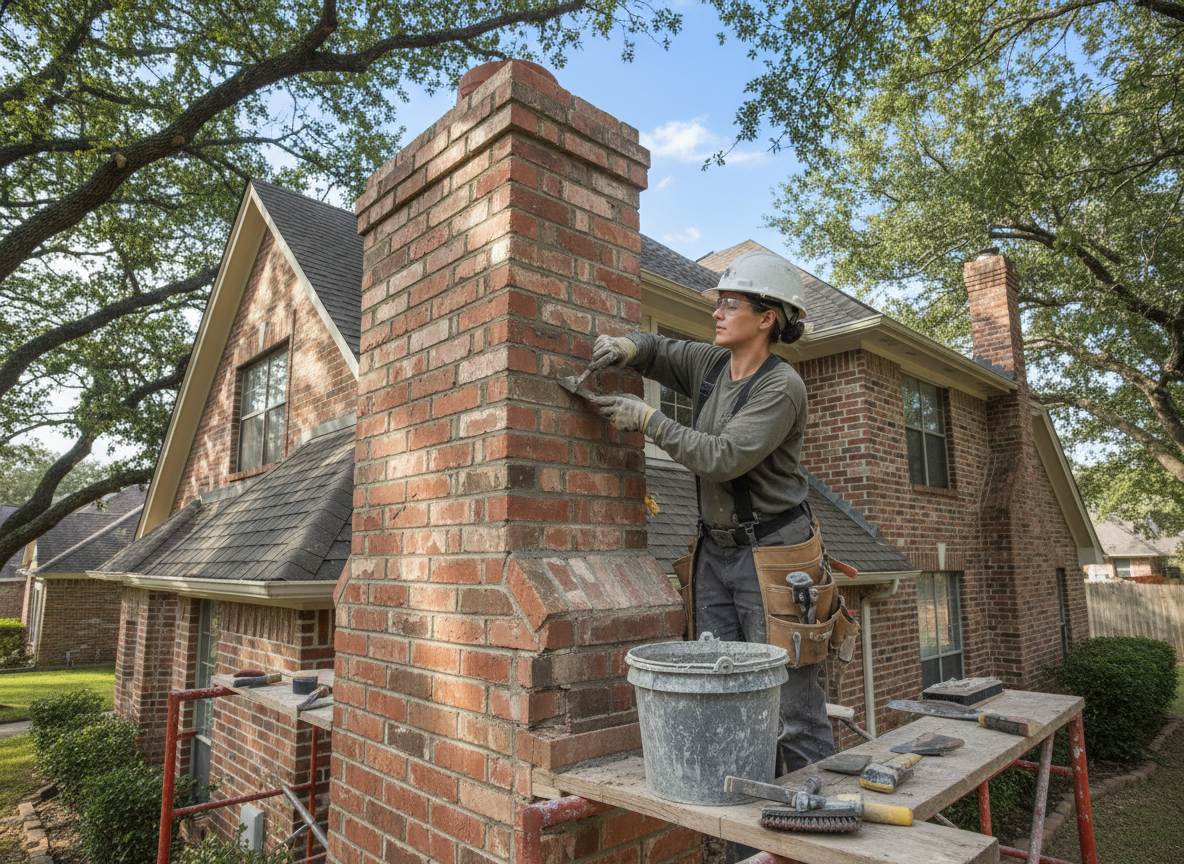
Benbrook homes built from the 1950s through the 1980s often feature brick chimneys set on clay-heavy soils common near the Trinity River. Over decades these soils shift with seasonal moisture changes, opening mortar joints that allow water entry during the rare hard freezes or heavy spring rains. Tuckpointing replaces failed mortar with fresh material matched to the original color and hardness so the chimney regains structural integrity without altering its appearance. Using the wrong mortar mix on older soft brick can cause faster cracking than the original failure.
Tuckpointing work here usually starts with a full height inspection from the roofline down to the cleanout. Technicians remove only the damaged mortar to a depth of three-quarters of an inch, taking care not to damage the brick faces that are already weathered from decades of West Texas sun. New mortar is tooled to match the existing profile, then kept damp for several days because rapid drying in our summer heat weakens the bond. Homeowners in areas like Ridglea Hills or west of Benbrook Lake frequently discover the need after noticing interior water stains during the first cold snap of the year.
Edge cases include chimneys that have settled unevenly because of nearby tree roots or poor original footings. In those situations the tuckpointing must be paired with addressing the root cause or the joints will reopen within a season. Code considerations in Tarrant County require that any work visible from the exterior maintain the original aesthetic on pre-1970 homes, so color matching is critical. We always test a small section first so the owner can approve the match before the full job proceeds.
Technician insight
In Benbrook, the thing that catches most people out with chimney tuckpointing is how the clay soils along the west side of town cause slow foundation movement that opens vertical cracks in the mortar long before the bricks themselves show damage. Homeowners often wait until they see interior staining near the fireplace, but by then water has already reached the flue liner on homes built before the mid-1970s.
Tuckpointing on a 1965 Ranch Chimney
A homeowner near Benbrook Lake noticed dark streaks on the interior brick after a winter rain. Inspection showed open mortar joints on the south face where settling from nearby clay soil had pulled the stack slightly. We removed the loose mortar, cleaned the joints, and installed color-matched tuckpointing while protecting the roof membrane. The chimney now sheds water properly and the interior staining has stopped.
How it works
- 1
Initial Inspection
We examine the full chimney height, noting joint condition, brick damage, and any signs of water intrusion or settling common on Benbrook lots.
- 2
Mortar Removal
Old mortar is cut out to the proper depth without damaging brick edges, focusing on areas most affected by local soil movement.
- 3
Joint Cleaning and Preparation
Joints are brushed and rinsed to remove dust and debris so the new mortar bonds properly to the existing masonry.
- 4
New Mortar Installation
Color-matched mortar is packed in and tooled to the original profile, then kept moist during curing to handle Benbrook's dry spells.
- 5
Final Review
The chimney is checked from roof and ground level to confirm all joints are uniform and the structure is watertight.
Pricing
Cost depends on chimney height, number of joints, and access difficulty; we provide upfront quotes after inspection.