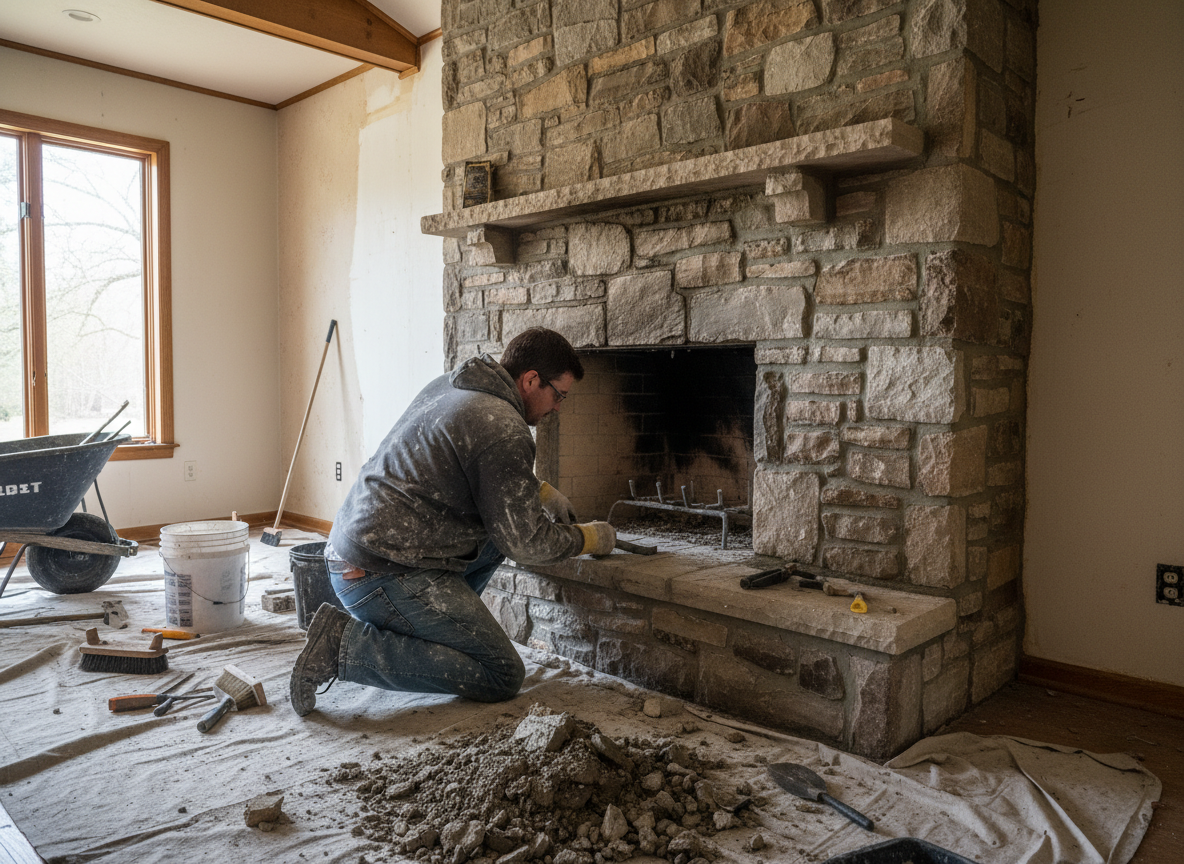
Benbrook homes built from the 1960s onward often feature masonry fireplaces tied into brick chimneys that settle with the clay-heavy soils around the Clear Fork Trinity River. Over decades these movements open gaps at the firebox throat and allow water to reach the smoke chamber. Fireplace restoration begins with a full inspection of the firebox, damper and flue tile, noting any spalling brick or failed mortar that lets heat reach framing members. Technicians remove loose material, repoint with high-temperature refractory mortar matched to the original brick, and install a stainless steel liner sized to the appliance when the existing flue has deteriorated beyond repair.
Tarrant County code requires proper clearances and a working damper or block-off plate when a gas log set is added. Restoration work frequently includes rebuilding the smoke shelf to restore proper draft and prevent downdrafts common when cold fronts push across the plains. Crews also check the crown and flashing where the chimney meets the roof, because wind-driven rain during spring storms is the leading cause of water damage inside the fireplace opening in this area.
Homeowners in neighborhoods near Benbrook Lake frequently discover creosote buildup and cracked tiles after decades of occasional winter use. Restoration includes cleaning the flue, repairing or replacing damaged tiles, and sealing the exterior brick with breathable masonry sealer that still allows moisture to escape. Every job ends with a safety inspection that documents clearances to combustibles and verifies the chimney draws correctly before the fireplace is returned to service.
Technician insight
In Benbrook, the thing that catches most people out with fireplace restoration is the clay soil movement around homes built near the lake in the 1970s. Settling shifts the firebox away from the flue, creating hidden gaps that only show up once you start removing old mortar.
Cracked Firebox Near Benbrook Lake
A homeowner noticed soot on the mantel after a cold snap. Inspection found the firebox had pulled away from the flue due to soil settling common in that part of Benbrook. The crew rebuilt the firebox with refractory brick, installed a new liner, and restored proper draft so the fireplace could be used safely again.
How it works
- 1
Initial Inspection
Technician examines the firebox, damper, flue and exterior chimney for cracks, water damage and code compliance issues.
- 2
Material Removal and Repair
Loose brick and mortar are removed; firebox and smoke chamber are rebuilt with refractory materials matched to existing construction.
- 3
Liner Installation
When needed, a stainless steel liner is fitted and insulated to restore proper draft and protect the chimney structure.
- 4
Final Testing and Cleanup
Draft is verified, clearances documented, and the work area is cleaned before the fireplace is returned to use.
Pricing
Pricing varies by the extent of masonry damage and whether a liner is needed; upfront quotes are provided after inspection.