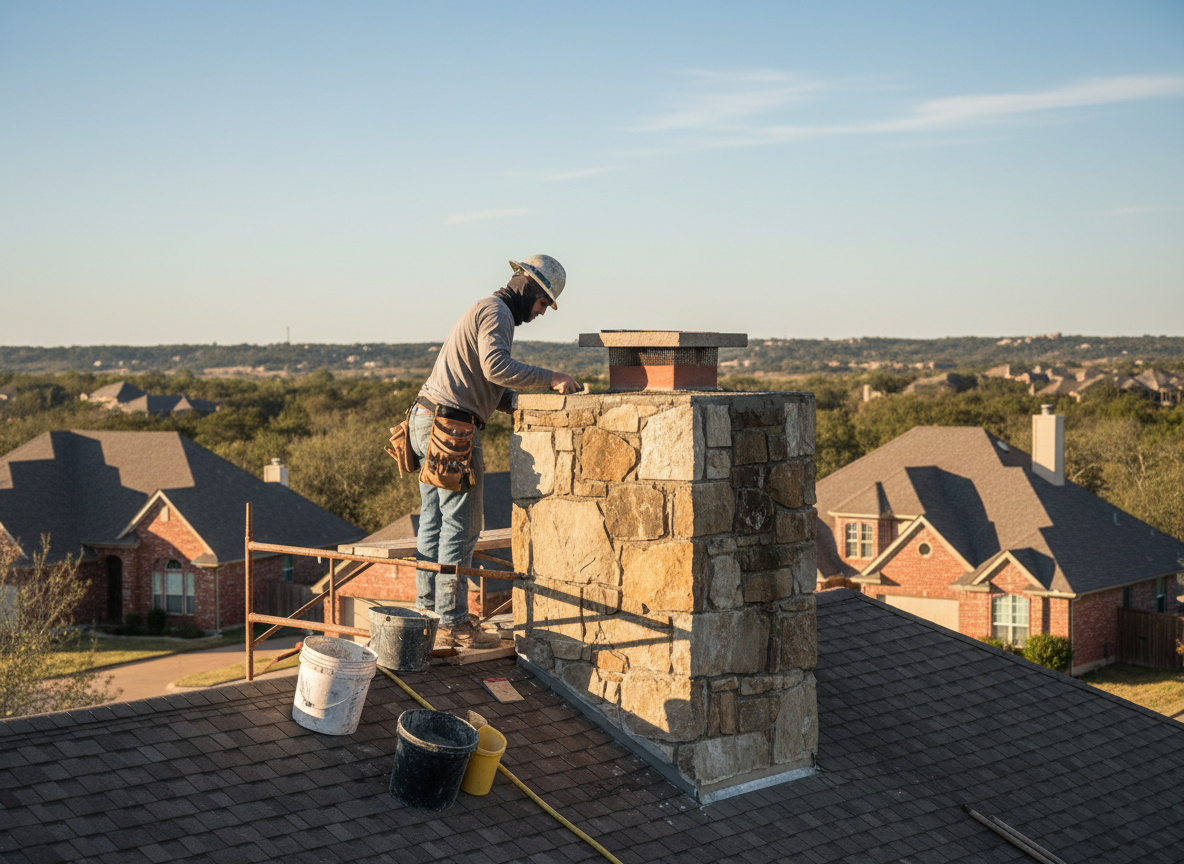
Benbrook homes built from the 1960s through 1980s often feature brick chimneys penetrating asphalt shingle roofs on single-story ranch layouts. Thunderstorms bring heavy rain and hail that degrade step flashing and counter flashing where the chimney meets the roof deck. Freeze-thaw cycles in winter can widen small gaps, allowing water to reach the attic sheathing and insulation. Proper repair requires removing damaged shingles, installing new lead or copper flashing sealed with high-temperature caulk, and ensuring the cricket or saddle diverts water correctly on the uphill side.
Soil movement in Tarrant County clay affects chimney footings over time, creating hairline cracks that propagate upward and loosen mortar joints near the roofline. Homeowners frequently notice stains on ceilings after spring storms rather than during the event itself. Technicians must inspect both the exterior chase and the attic penetration, checking for rotted rafters or compromised underlayment that a surface patch would miss. Matching the existing shingle color and profile keeps the repair visually consistent on older roofs.
Code requirements in Benbrook call for proper clearance from combustibles and secure attachment to the structure. Skipping the cricket on wider chimneys leads to recurring leaks within two seasons. Using incompatible sealants that soften in Texas heat causes the same failures within a year. A full roof chimney repair includes replacing any damaged sheathing, re-securing the flue cap, and verifying draft after completion so the fireplace operates safely.
Technician insight
In Benbrook, the thing that catches most people out with roof chimney repair is how clay soil movement around 1970s homes off Winscott Road shifts the chimney footing just enough to crack the base flashing seal after every hard freeze.
Leak After Spring Storms on a Benbrook Ranch
Water stains appeared on the ceiling near the fireplace after several heavy rains. Inspection showed deteriorated step flashing and a missing cricket on the uphill side of the chimney. New copper flashing and a properly sized cricket were installed, damaged sheathing was replaced, and matching shingles restored the roof plane. The homeowner reported no further leaks during the next thunderstorm season.
How it works
- 1
Site Assessment
Examine the chimney exterior, roof penetration, attic space, and flashing condition on the specific Benbrook property.
- 2
Material Removal
Strip damaged shingles, old flashing, and compromised underlayment while protecting surrounding roof sections.
- 3
Flashing and Cricket Installation
Install new step flashing, counter flashing, and a properly sized cricket to redirect water flow.
- 4
Restoration and Testing
Replace shingles to match existing profile, reseal joints, and confirm no leaks remain after a water test.
Pricing
Upfront quotes provided after on-site inspection; pricing varies with roof pitch, chimney width, and extent of water damage.